Circular Design Principles for Demountable Fabric Acoustic Panels
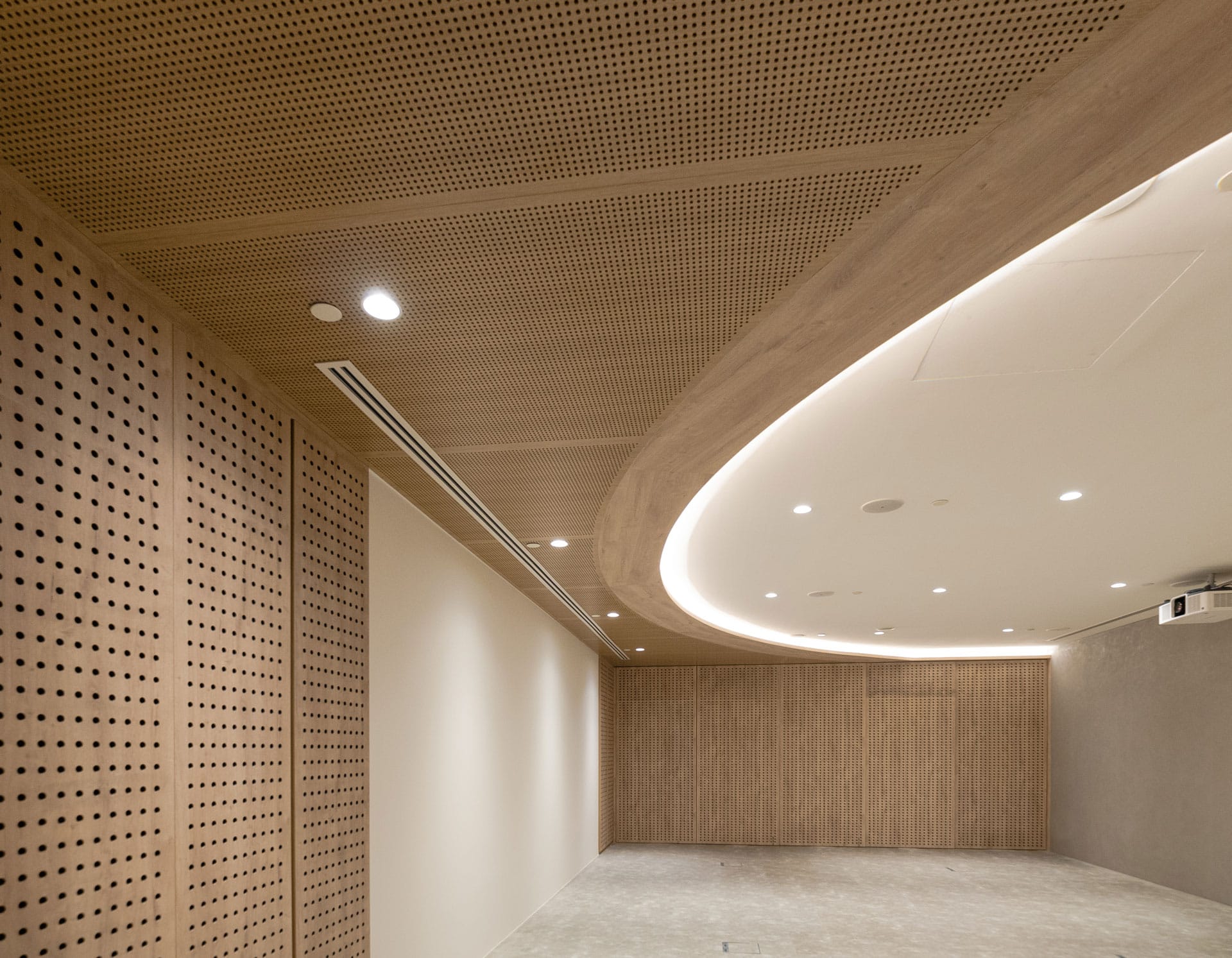
Designing for Disassembly in Acoustic Interiors
The transition from linear material consumption to regenerative construction models has redefined how interior acoustic systems are conceived. Demountable fabric acoustic panels exemplify this shift by enabling reversibility, reuse, and material recovery without compromising performance. Circular design principles emphasise durability, separability, and documented material flows, aligning acoustic specification with broader sustainability frameworks in architecture and construction.¹

Material Loops and Modular Logic
Circular construction depends on systems thinking, where materials are selected and detailed for continuous value retention rather than disposal.
Design for Disassembly
Design for disassembly (DfD) encourages mechanical fixing methods that allow components to be removed intact at end of service life. The Ellen MacArthur Foundation outlines circular economy strategies centred on maintaining product integrity and enabling reuse¹. In demountable fabric acoustic panels, aluminium frames, clip-in tracks, and tensioned textile skins can be separated without destructive adhesives, supporting refurbishment and relocation.
Mechanical demountability also reduces on-site waste during renovation cycles. Panels can be replaced or reconfigured to accommodate spatial changes, extending functional lifespan while minimising embodied carbon impacts.
Mono-Material and Separation Strategy
Material simplification enhances recyclability. Polyester-based acoustic cores paired with aluminium subframes exemplify separable assemblies where each material stream can be independently recovered. Research from the European Commission emphasises product design strategies that facilitate resource efficiency and waste reduction².
Clear identification of material layers improves end-of-life processing. Labelling and digital documentation further ensure that textile membranes, insulation cores, and framing components are directed to appropriate recycling channels.
Durability and Life Extension
Circularity depends on longevity. Fabric acoustic panels engineered for tensile stability, UV resistance, and abrasion durability reduce replacement frequency. Architectural acoustics literature confirms that predictable absorption performance over time is critical to maintaining spatial quality³.
Durable fabrics with replaceable skins enable aesthetic renewal without discarding structural frames. This modular replacement logic preserves embodied energy within the primary assembly while refreshing interior appearance.

Life-Cycle Thinking in Acoustic Specification
Life-cycle assessment (LCA) reframes acoustic panel selection beyond initial cost or NRC ratings. According to ISO 14040 standards on environmental management, LCA evaluates impacts across extraction, manufacturing, use, and end-of-life phases⁴. For demountable textile systems, this means quantifying embodied carbon, transportation impacts, and recovery potential.
First, material sourcing significantly influences environmental footprint. Recycled polyester fibres derived from post-consumer plastics reduce virgin resource extraction and associated emissions. Transparent documentation through environmental product declarations (EPDs) strengthens comparative assessment during specification.
Second, installation methodology affects life-cycle performance. Panels designed for clip-in or track-mounted configurations avoid solvent-based adhesives, facilitating removal and reducing indoor air contamination during refurbishment. Mechanical connections preserve component integrity and support future reuse.
Third, adaptability enhances environmental resilience. As office layouts evolve, demountable acoustic panels can be reconfigured without demolition. This flexibility corresponds with circular building strategies highlighted in sustainable construction research⁵, reinforcing the value of reversible interior systems.

Operational and Environmental Synergies
Demountable acoustic panels contribute to operational sustainability by balancing acoustic performance with resource conservation.
Acoustic Performance Stability
Stable absorption coefficients across frequency ranges ensure that reused panels maintain speech clarity and reverberation control. Research on room acoustics emphasises the importance of consistent material properties in maintaining acoustic comfort³. Circularity must not undermine measurable acoustic outcomes.
Indoor Air Quality Integration
Low-emission fabrics tested against recognised standards reduce volatile organic compound exposure during both initial installation and reinstallation. Reversible systems minimise the need for new adhesives, aligning with indoor environmental quality benchmarks in green building frameworks⁶.
Digital Material Passports
Digital product passports document composition, recyclability, and maintenance guidelines. The European Commission’s circular economy action plan promotes digital tracking to improve material transparency². For fabric acoustic systems, such documentation ensures traceable reuse pathways and informed refurbishment decisions.
Fire and Safety Continuity
Circular assemblies must maintain fire-resistant properties throughout reuse cycles. Textile membranes tested for reaction-to-fire standards preserve occupant safety even after multiple installations. Designing replaceable yet compliant skins ensures regulatory alignment without sacrificing environmental goals.
Regenerative Interior Futures
Circular design principles redefine demountable fabric acoustic panels as long-term assets rather than consumable finishes. By integrating design for disassembly, mono-material strategies, and life-cycle transparency, these systems reduce waste generation and embodied carbon intensity. They respond directly to global sustainability agendas that call for resource efficiency and decarbonisation within the built environment¹.
Importantly, acoustic comfort remains central. Effective reverberation control improves communication, productivity, and wellbeing³, reinforcing the social dimension of sustainable interiors. When panels are engineered for mechanical demountability and recyclable components, they contribute simultaneously to environmental stewardship and human-centred design.
As renovation cycles accelerate in commercial and educational buildings, reversible acoustic systems will become essential. Their adaptability reduces demolition waste, supports evolving spatial layouts, and maintains measurable performance. Circular acoustic design therefore represents not only a technical advancement but a cultural shift toward regenerative architectural practice.
References
United Nations Environment Programme. (2022). 2022 Global Status Report for Buildings and Construction. Global Alliance for Buildings and Construction.
Ellen MacArthur Foundation. (2013). Towards the Circular Economy Vol. 1: An Economic and Business Rationale for an Accelerated Transition. Ellen MacArthur Foundation.
European Commission. (2020). A New Circular Economy Action Plan For a Cleaner and More Competitive Europe. European Commission.
California Department of Public Health. (2017). Standard Method for the Testing and Evaluation of Volatile Organic Chemical Emissions from Indoor Sources Using Environmental Chambers (Version 1.2). California Department of Public Health.
U.S. Green Building Council. (2023). LEED v4.1 Indoor Environmental Quality Credit: Low-Emitting Materials. U.S. Green Building Council.
World Green Building Council. (2014). Health, Wellbeing and Productivity in Offices: The Next Chapter for Green Building. World Green Building Council.
Share