Low VOC Materials in Fabric Acoustic Panels and Interior Fit-Outs
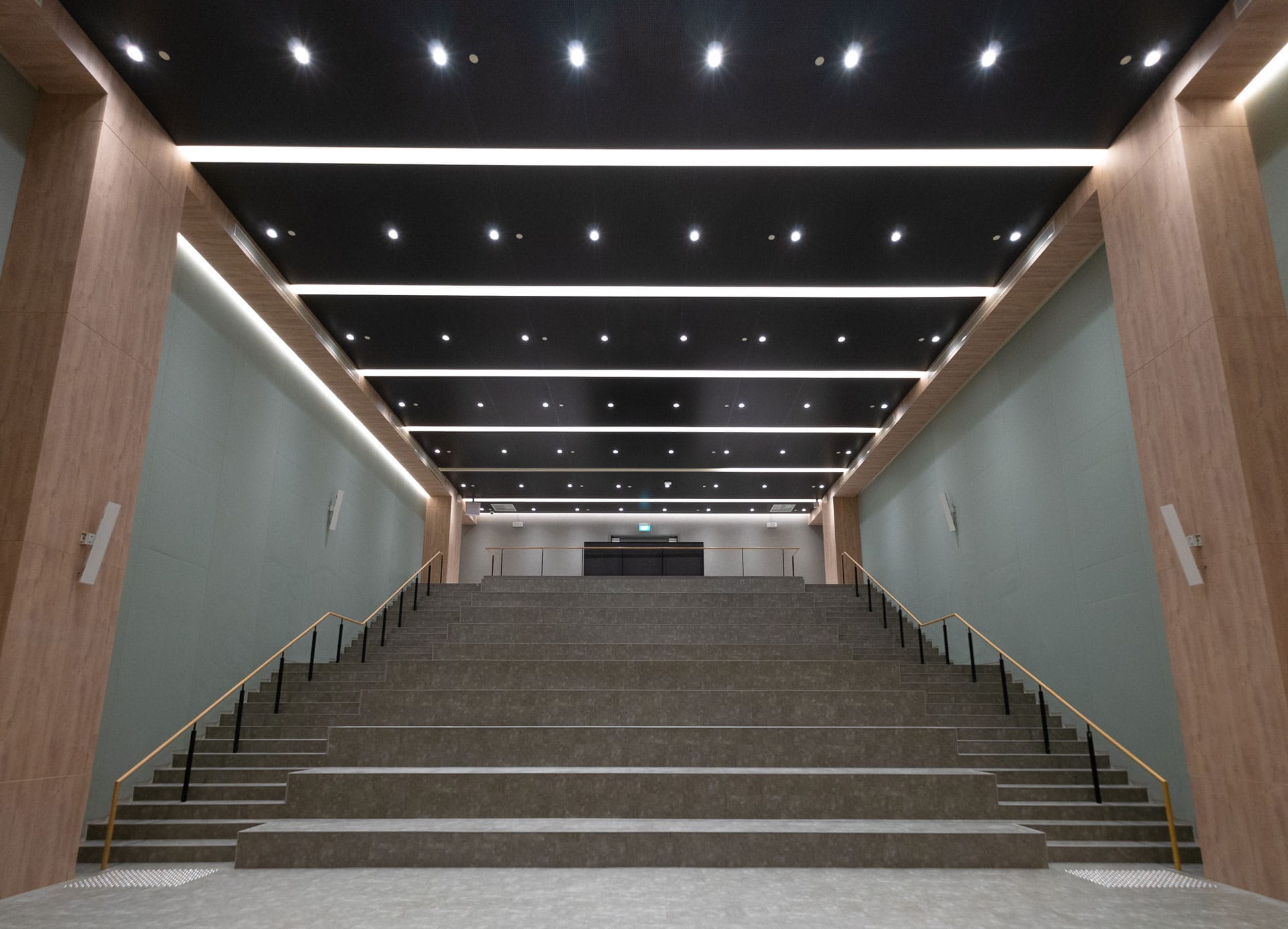
Healthy Interiors Through Material Transparency
Indoor environmental quality has become central to contemporary architecture, particularly as occupants spend increasing time within sealed and mechanically ventilated spaces. Among interior finishes, fabric acoustic panels play a dual role: improving sound absorption while contributing to overall material emissions within a space. The specification of low volatile organic compound (VOC) materials in fabric acoustic panels and broader interior fit-outs aligns acoustic performance with health-driven sustainability objectives. As global building reports emphasise decarbonisation and improved material transparency², reducing indoor chemical emissions has become integral to responsible interior design.

Sources of VOCs in Acoustic Assemblies
Fabric acoustic panels consist of textile facings, acoustic cores, backing boards, and installation systems. Each component can influence indoor air chemistry.
Textile Finishes and Dye Chemistry
Surface fabrics are often treated with dyes, flame retardants, or stain-resistant coatings. These treatments may emit formaldehyde, aldehydes, or other VOCs if not carefully formulated. The California Department of Public Health (CDPH) Standard Method v1.2 provides environmental chamber protocols to evaluate emission rates over defined periods³. Panels tested against this benchmark demonstrate reduced pollutant release, supporting safer indoor applications.
Low-emission textiles are typically engineered using water-based dyes and mechanically stabilised fibres. This approach limits solvent use while preserving fabric colour consistency and acoustic permeability.
Acoustic Core Materials
Acoustic cores may include mineral wool, polyester fibre, or recycled textile composites. Emission profiles vary depending on binder chemistry. Polyester-based cores thermally bonded without chemical adhesives reduce off-gassing potential, supporting long-term IAQ stability.
Research in architectural acoustics confirms that porous absorbers maintain performance when airflow resistivity and density are balanced⁴. Low-VOC core materials therefore achieve both acoustic and environmental objectives when properly engineered.
Adhesives and Installation Methods
Construction adhesives are a significant source of VOC introduction during interior fit-outs. Solvent-based mastics can release emissions independent of the panel material itself. Mechanical fixing systems, clip-in tracks, and tensioned fabric frames minimise chemical additions during installation.
Water-based adhesives further mitigate emission levels. Selecting compliant installation systems is essential for achieving measurable reductions in indoor pollutant concentration.

Performance Standards and Certification Frameworks
Third-party testing ensures that low-VOC claims are supported by measurable evidence rather than marketing assertions.
The CDPH environmental chamber protocol remains a foundational reference for emission testing³. Products meeting its criteria demonstrate controlled emission levels after 14 and 28 days of testing, forming the basis for many certification schemes.
Green building frameworks such as LEED v4.1 reward low-emitting materials within indoor environmental quality credits⁵. Fabric acoustic panels that comply with recognised standards contribute directly to sustainable procurement strategies. Transparency in documentation strengthens evidence-based specification and supports compliance reporting.
Additionally, the World Health Organization identifies indoor air pollution as a significant health concern, linking prolonged exposure to adverse respiratory outcomes⁶. Reducing emission sources in interior finishes is therefore a preventative health strategy aligned with global public health guidance.

Design Strategies for Healthy Fit-Outs
Low-VOC acoustic solutions require coordination between material science, detailing, and regulatory alignment.
Material Disclosure Transparency
Environmental product declarations (EPDs) and health product disclosures document material composition and potential impacts. Transparent reporting supports responsible sourcing and aligns with circular construction strategies².
Clear documentation reduces uncertainty in specification and enables comparison between competing acoustic systems.
Fire Safety Without Emissions
Flame-retardant treatments must comply with safety codes without introducing hazardous chemicals. Modern fire-resistant textiles achieve compliance through inherent fibre chemistry rather than additive coatings, reducing potential emission sources.
Balancing fire performance and IAQ strengthens occupant safety on multiple levels.
Recycled Content Integration
Recycled polyester fibres derived from post-consumer plastics reduce virgin resource extraction while maintaining acoustic absorption properties. Resource efficiency aligns with global sustainability directives² and reinforces environmental responsibility in interior fit-outs.
Acoustic and Health Synergy
Improved speech clarity and reduced reverberation enhance cognitive comfort in offices, schools, and healthcare environments⁴. When paired with low-emission materials, acoustic panels contribute simultaneously to psychological wellbeing and physiological health.
This synergy illustrates that acoustic design and IAQ performance are complementary rather than competing priorities.

Towards Health-Centred Acoustic Architecture
Low-VOC materials in fabric acoustic panels redefine interior fit-outs as health-focused systems rather than decorative afterthoughts. By prioritising emission testing, transparent documentation, and integrated specification strategies, designers can mitigate chemical exposure while preserving high acoustic performance. International sustainability frameworks increasingly demand measurable improvements in indoor environmental quality², reinforcing the importance of material transparency within acoustic assemblies.
As awareness of indoor air pollution expands⁶, fabric acoustic panels must demonstrate compliance with recognised standards and maintain long-term emission stability. Mechanical installation methods, thermally bonded fibre cores, and low-emission textiles collectively reduce VOC concentrations without compromising fire resistance or sound absorption efficiency.
The evolution of interior fit-outs toward low-emission assemblies reflects a broader transformation within architecture: from performance measured solely in aesthetics and acoustics to holistic environmental stewardship. By integrating acoustic clarity, material safety, and sustainable sourcing, low-VOC fabric panels contribute to healthier, more resilient built environments.
References
- United Nations Environment Programme. (2022). 2022 Global Status Report for Buildings and Construction. Global Alliance for Buildings and Construction.
California Department of Public Health. (2017). Standard Method for the Testing and Evaluation of Volatile Organic Chemical Emissions from Indoor Sources Using Environmental Chambers (Version 1.2). California Department of Public Health.
U.S. Green Building Council. (2023). LEED v4.1 Indoor Environmental Quality Credit: Low-Emitting Materials. Springer.
Egan, M. D. (2007). Architectural Acoustics. McGraw–Hill Education. Focal Press.
Loos, A. (2017). Room Acoustics and Sound Absorption. Springer.
SCS Global Services. (2022). FloorScore® Certification Program Overview. McGraw-Hill Education.
World Green Building Council. (2019). Health, Wellbeing & Productivity in Offices. Springer.
Share