Fire-Rated Fabric Acoustic Panels for Interior Wall and Ceiling Use
Balancing Fire Safety and Acoustic Performance
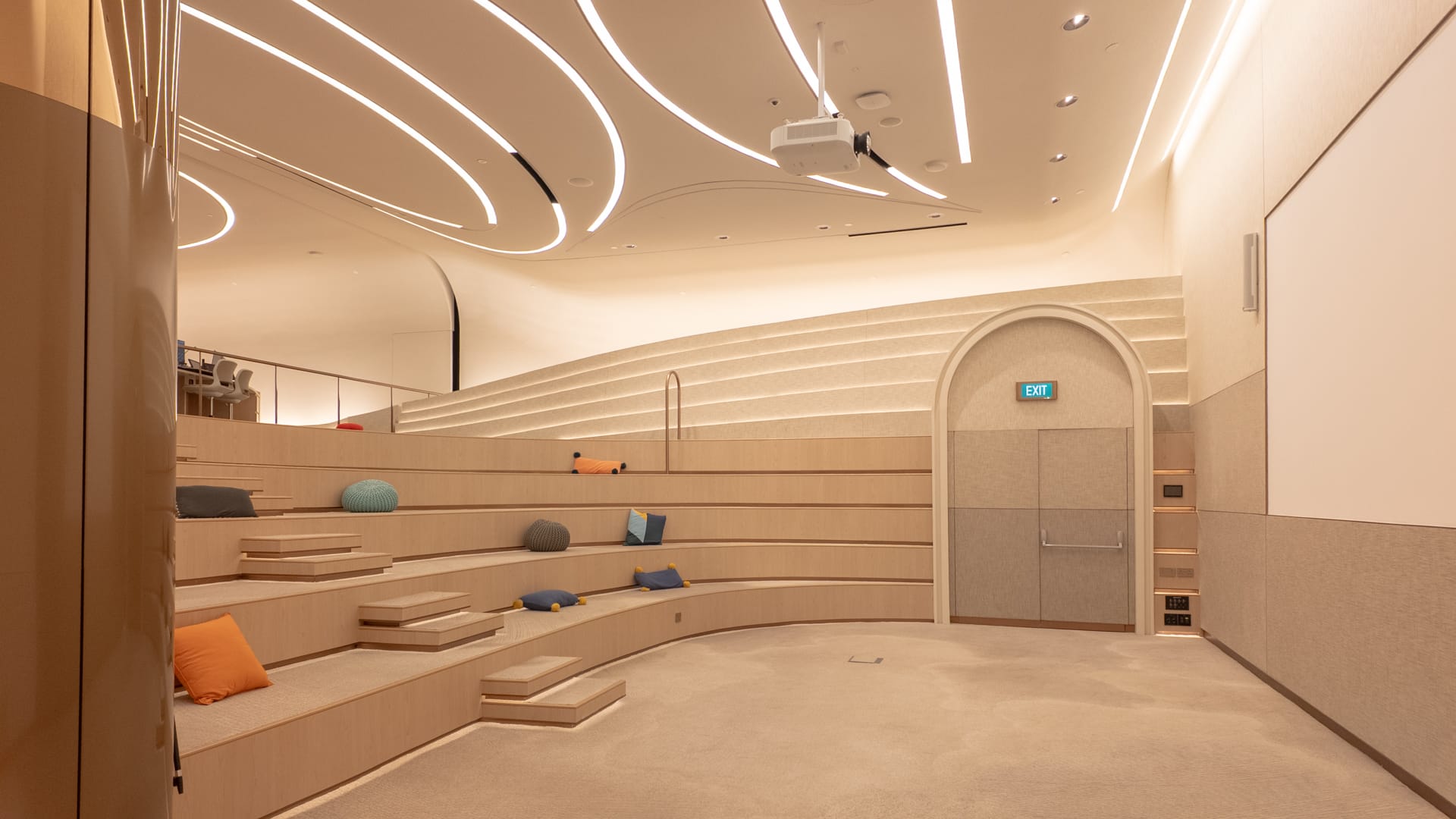
Interior acoustic systems are increasingly required to satisfy both sound control and stringent fire performance criteria. In commercial, educational, and assembly buildings, fabric acoustic panels used on walls and ceilings must comply with recognised fire classification standards while maintaining measurable absorption performance. Fire-rated fabric acoustic panels therefore represent a convergence of material science, regulatory compliance, and architectural acoustics. As global building frameworks continue to emphasise life safety and performance transparency¹, integrating fire resistance into textile-based acoustic assemblies has become a fundamental design requirement rather than a specialist upgrade.
Fire Classification Standards and Testing Protocols
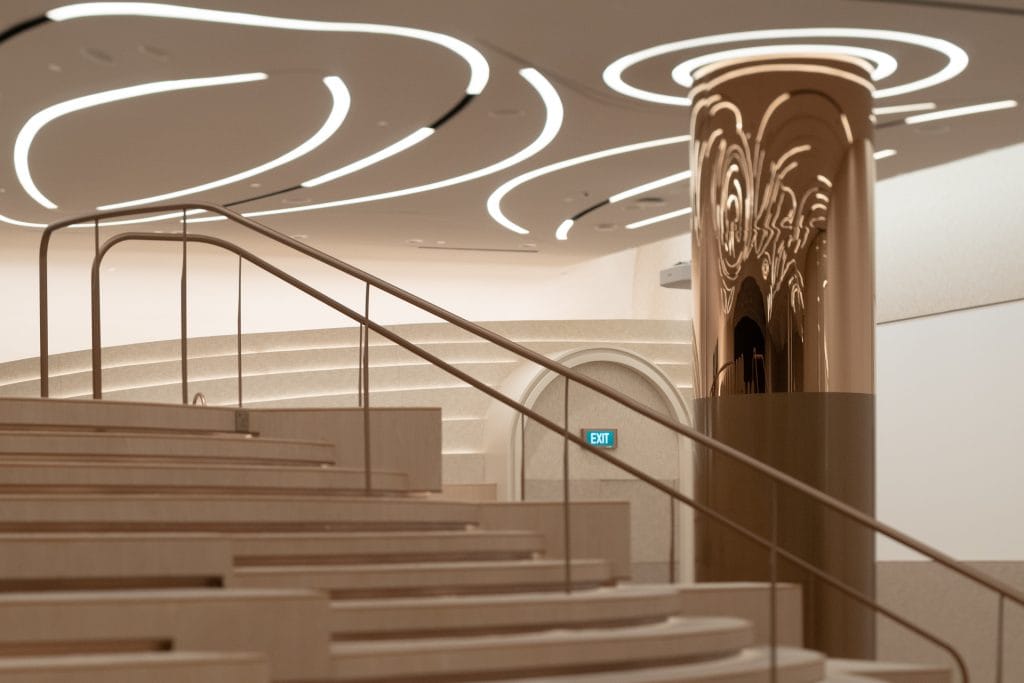
Fire-rated acoustic panels are evaluated under internationally recognised standards that define reaction-to-fire behaviour, flame spread, and smoke development characteristics.
Reaction to Fire Ratings
In Europe and many international markets, EN 13501-1 establishes classification systems for reaction to fire². Materials are categorised according to combustibility, flame spread contribution, and smoke production. Fabric acoustic panels installed on walls or ceilings must achieve specified Euroclass ratings, often B-s1,d0 or higher, depending on occupancy type.
These classifications ensure predictable behaviour under fire exposure, supporting evacuation safety and limiting flame propagation along interior surfaces.
Surface Flame Spread Performance
In North America, ASTM E84 evaluates surface burning characteristics through Steiner tunnel testing³. Flame spread index and smoke-developed index values determine whether materials meet Class A, B, or C requirements. Fabric acoustic panels designed for wall and ceiling application typically aim for Class A compliance in commercial interiors.
Fire-resistant textile facings combined with non-combustible cores contribute to improved performance outcomes under this standardised test method.
Smoke and Toxicity Considerations
Beyond ignition resistance, smoke production and toxicity influence occupant safety during fire events. The International Building Code (IBC) references fire testing standards to regulate interior finish classifications⁴. Low smoke development reduces visibility obstruction and toxic inhalation risks during evacuation.
Advanced textile engineering achieves compliance through inherent fibre chemistry rather than heavy chemical coatings, limiting secondary health concerns while preserving acoustic transparency.
Material Engineering for Fire Resistance
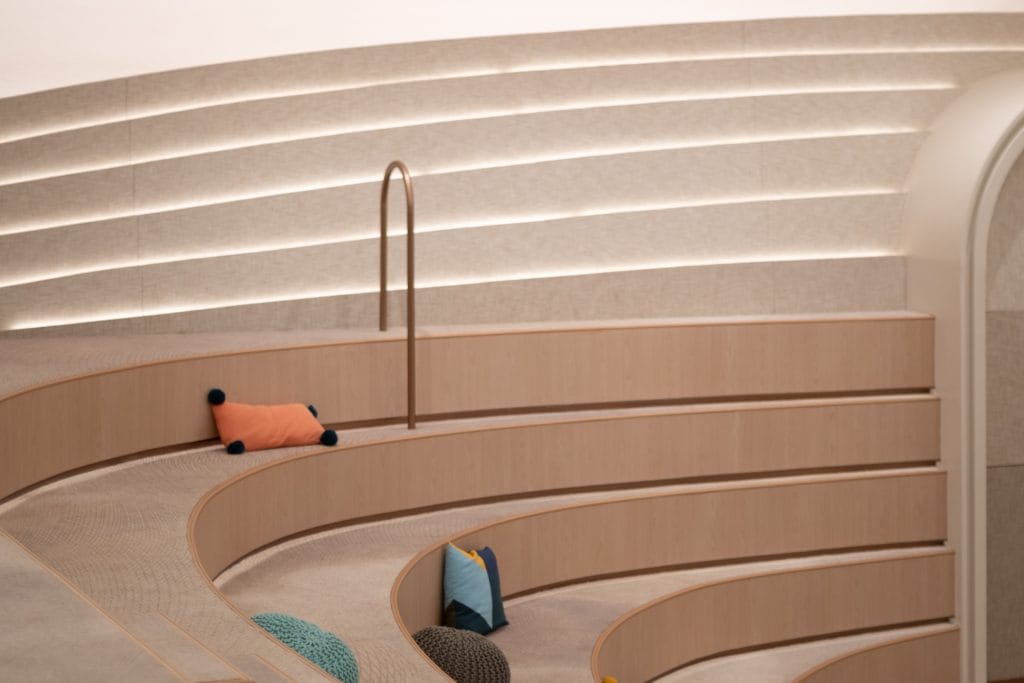
Fire-rated acoustic panels integrate flame-resistant textiles, stable core materials, and compliant backing systems to achieve certification without compromising sound absorption.
Mineral wool cores, for instance, provide non-combustible acoustic insulation and contribute to improved fire resistance. Polyester fibres engineered with fire-retardant properties offer an alternative lightweight solution when formulated to meet regulatory thresholds. The balance between density, airflow resistivity, and fire performance is critical, as outlined in architectural acoustics research⁵.
Textile membranes may incorporate inherently flame-resistant fibres such as Trevira CS, which embed fire resistance within the polymer structure. This approach avoids surface-applied flame retardants that can degrade over time. Combined with mechanically fixed aluminium frames, these assemblies reduce combustible components within the system.
Ceiling applications require particular attention due to overhead installation and potential fire exposure from below. Panels must maintain structural stability during elevated temperatures to prevent early collapse, reinforcing the importance of tested assemblies rather than individual component compliance.
Design Integration and Regulatory Coordination
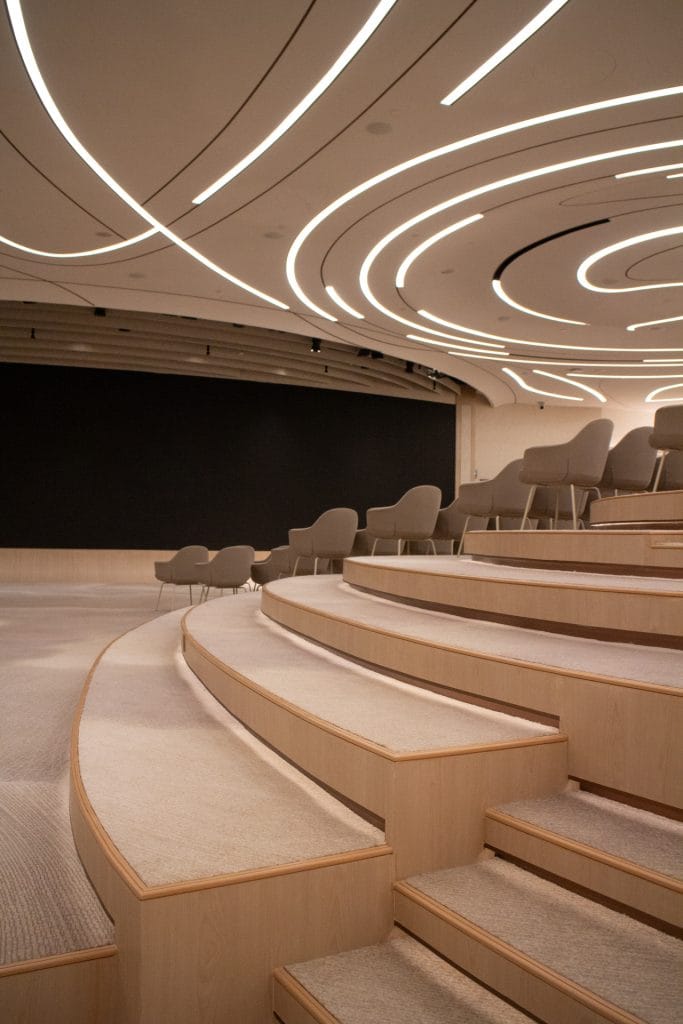
Fire-rated fabric acoustic panels require coordination between architectural detailing, mechanical systems, and regulatory frameworks.
Wall Assembly Compatibility
Panels must integrate with fire-rated wall substrates without compromising compartmentation integrity. Proper detailing ensures that acoustic treatments do not interfere with fire-resistance-rated partitions defined in building codes⁴.
Coordination with gypsum board systems and structural framing is essential for compliance.
Ceiling Installation Requirements
Ceiling-mounted acoustic panels must comply with suspended ceiling regulations and maintain fire performance above and below the plenum. Non-combustible suspension grids and compliant fixing systems reinforce system-wide safety.
Sustainability and Fire Safety
Fire-rated assemblies can align with environmental targets when low-emission and recyclable components are selected. Global sustainability reports emphasise decarbonisation within building materials¹. Non-toxic, inherently flame-resistant fibres support both fire safety and environmental health objectives.
Documentation and Certification
Third-party certification documentation verifies compliance with EN, ASTM, or IBC requirements²³⁴. Transparent reporting strengthens specification confidence and ensures regulatory approval during project review stages.
Clear documentation is particularly critical in high-occupancy spaces such as auditoriums, schools, and offices.

Safe and Sound Interior Architecture
Fire-rated fabric acoustic panels embody the intersection of life safety and acoustic excellence. By satisfying reaction-to-fire classifications while delivering effective reverberation control, these systems enable safe, comfortable interior environments across commercial and institutional sectors. International building codes and testing standards²³⁴ establish measurable benchmarks that ensure predictable behaviour during fire exposure, reinforcing occupant protection.
At the same time, maintaining acoustic clarity enhances communication, productivity, and wellbeing⁵. Successful integration depends on inherent flame-resistant textiles, stable non-combustible cores, and mechanically secure installation systems. When supported by transparent certification and regulatory alignment, fire-rated fabric acoustic panels contribute to interiors that are not only aesthetically refined and acoustically controlled but fundamentally safe.
The future of interior wall and ceiling specification lies in performance integration—where acoustic comfort, fire resistance, sustainability, and material transparency operate collectively. Fire-rated textile acoustic systems demonstrate that life safety and acoustic optimisation are not competing priorities but complementary foundations of resilient architectural design.
References
United Nations Environment Programme. (2022). 2022 Global Status Report for Buildings and Construction. Global Alliance for Buildings and Construction.
European Committee for Standardization. (2018). EN 13501-1: Fire Classification of Construction Products and Building Elements – Part 1: Classification Using Data from Reaction to Fire Tests. CEN.
ASTM International. (2021). ASTM E84: Standard Test Method for Surface Burning Characteristics of Building Materials. ASTM International.
International Code Council. (2021). International Building Code (IBC 2021 Edition). International Code Council.
International Organization for Standardization. (2019). ISO 5659-1: Plastics — Smoke Generation — Part 1: Guidance on Smoke Measurement. ISO.
Egan, M. D. (2007). Architectural Acoustics. McGraw-Hill Education.
Share