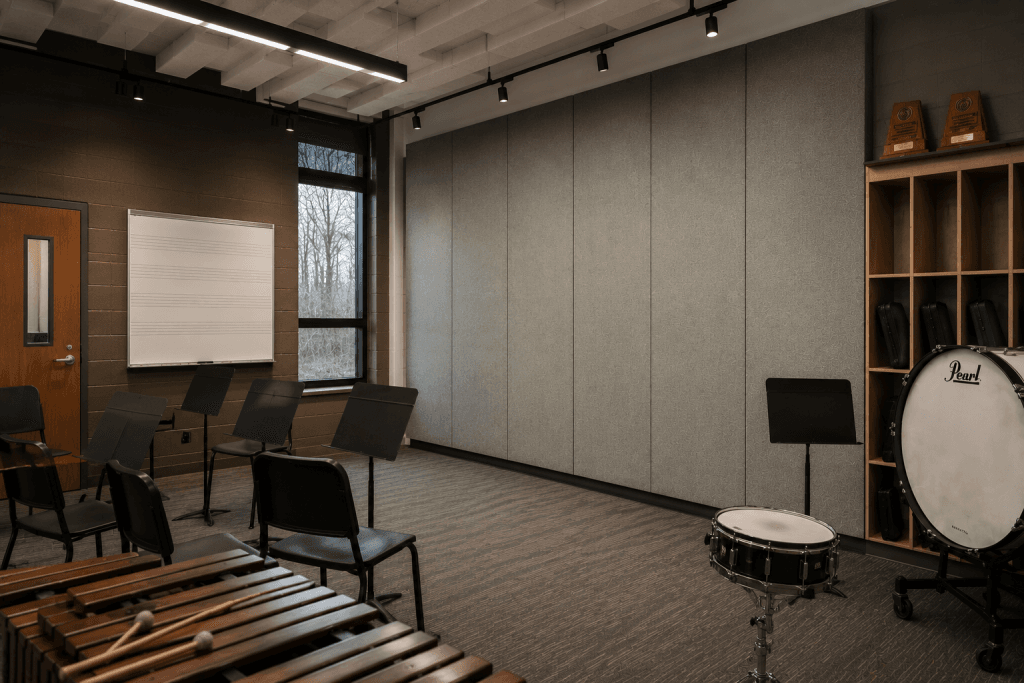
Fabric acoustic wall systems are increasingly specified in auditoriums, offices, schools, hospitality spaces, and commercial interiors due to their acoustic absorption, aesthetic flexibility, and lightweight installation properties. Yet, growing scrutiny surrounding facade fire performance has also influenced how designers assess interior acoustic materials. High-profile facade fire incidents have demonstrated how concealed cavities, combustible finishes, and inadequate fire compartmentation can accelerate flame spread across buildings². These lessons have reshaped the understanding of material safety beyond the external envelope and into interior acoustic systems.
Modern facade regulations increasingly emphasise material combustibility, smoke development, cavity barriers, and system-level testing rather than isolated product testing alone¹. Similar principles are now relevant to fabric acoustic walls because these systems also contain layered assemblies, air gaps, insulation cores, and mounting tracks.
Facade investigations revealed that a single non-compliant layer can compromise an otherwise safe assembly². Fabric acoustic walls often combine textiles, foam, polyester fibre, mineral wool, aluminium tracks, and adhesives. Even when the visible fabric achieves a fire rating, concealed backing materials may contribute to flame propagation if not properly assessed.
International standards increasingly distinguish between surface flame spread and total system behaviour³. This has encouraged architects to specify complete tested assemblies instead of relying solely on individual component certifications.
Smoke inhalation remains one of the greatest risks during building fires⁴. Facade fire research demonstrated that smoke generation and toxic gases can spread rapidly through ventilation paths and cavities. Similar concerns apply to interior acoustic systems installed across corridors, theatres, and escape routes.
Fabric acoustic walls must therefore be evaluated not only for ignition resistance but also for smoke emission performance. Materials achieving classifications under EN 13501-1 often include additional smoke indices that help designers assess visibility and occupant evacuation conditions⁵.
Facade regulations increasingly focus on concealed cavity barriers because hidden air spaces can intensify chimney effects². Acoustic wall systems similarly use mounting cavities to improve sound absorption performance. While beneficial acoustically, these voids may permit hidden flame travel if not interrupted correctly.
Designers now commonly integrate non-combustible insulation, mineral-based absorbers, and fire-stopping measures behind acoustic wall systems to reduce hidden fire spread risks while maintaining acoustic efficiency³.
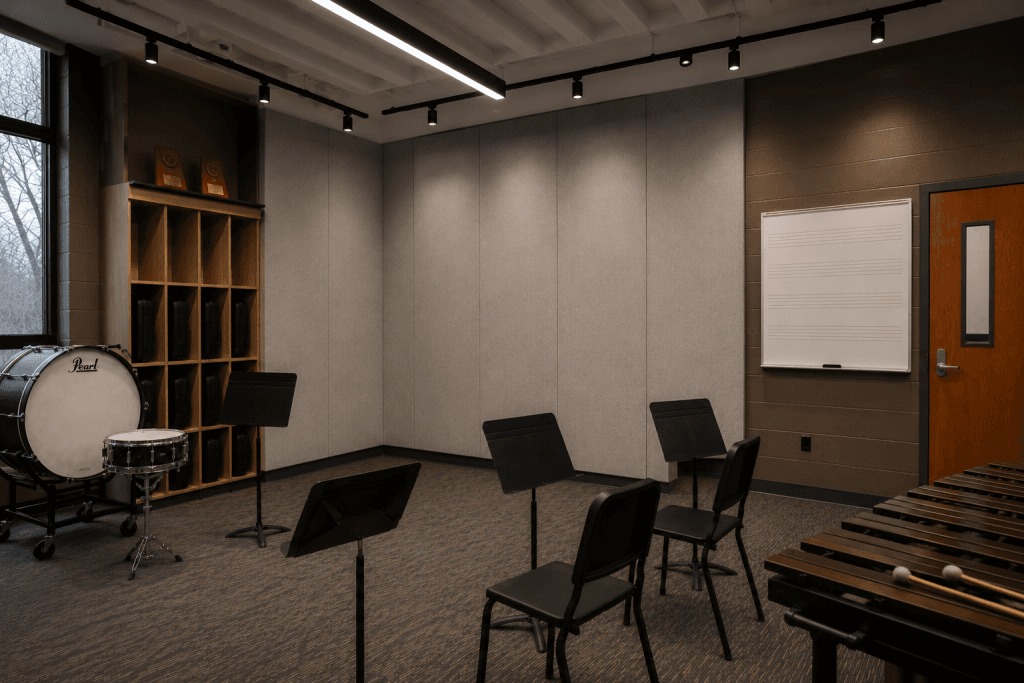
Facade regulations have demonstrated the limitations of relying solely on small-scale surface tests. System-wide fire performance now receives greater emphasis because interactions between insulation, substrates, adhesives, and cladding layers significantly affect fire outcomes¹. Similar thinking increasingly shapes the specification of fabric acoustic walls.
Many acoustic fabrics achieve Class A or Class 0 surface spread ratings, yet the underlying system configuration remains equally important. Adhesives, foam backings, and polyester cores can alter thermal behaviour during sustained exposure. Consequently, project specifications increasingly request documentation for full assembly testing rather than isolated fabric certification⁵.
Large-scale facade fire testing also reinforced the importance of installation quality. Incorrect fixings, substituted insulation, or unsealed cavities can undermine certified systems². Interior acoustic installations face similar risks when contractors replace tested materials with cheaper alternatives during construction. As a result, consultants increasingly require traceable documentation, manufacturer-approved installation methods, and tested substrate compatibility.
Another lesson from facade regulation involves durability and lifecycle considerations. Fire performance may degrade over time due to moisture exposure, delamination, ageing adhesives, or maintenance modifications⁶. Acoustic wall systems installed in high-humidity environments or public buildings therefore require periodic inspection to ensure continued compliance with safety standards.
The integration of sustainability objectives has also complicated material selection. Many recycled polyester acoustic panels support environmental certifications and circular economy targets, yet regulators increasingly evaluate how recycled content influences combustibility and smoke development⁷. This does not discourage sustainable acoustic materials, but it reinforces the importance of transparent testing and certification pathways.

Facade safety frameworks increasingly encourage integrated fire engineering approaches that balance aesthetics, sustainability, and occupant protection. These same principles can improve the specification of interior acoustic wall systems.
Mineral wool cores generally provide stronger fire resistance than polyurethane foams or untreated fibre fillings. Their non-combustible nature also supports cavity protection strategies³.
Designers increasingly prioritise tested wall assemblies with documented EN 13501-1 or ASTM E84 classifications rather than relying on decorative fabrics alone⁵.
Acoustic cavities should remain carefully dimensioned and compartmented. Fire-stopping details may reduce concealed flame movement without severely affecting absorption performance².
Facade regulation highlighted the dangers of undocumented substitutions during procurement. Acoustic specifications increasingly require traceable fire reports, installation details, and manufacturer declarations¹.
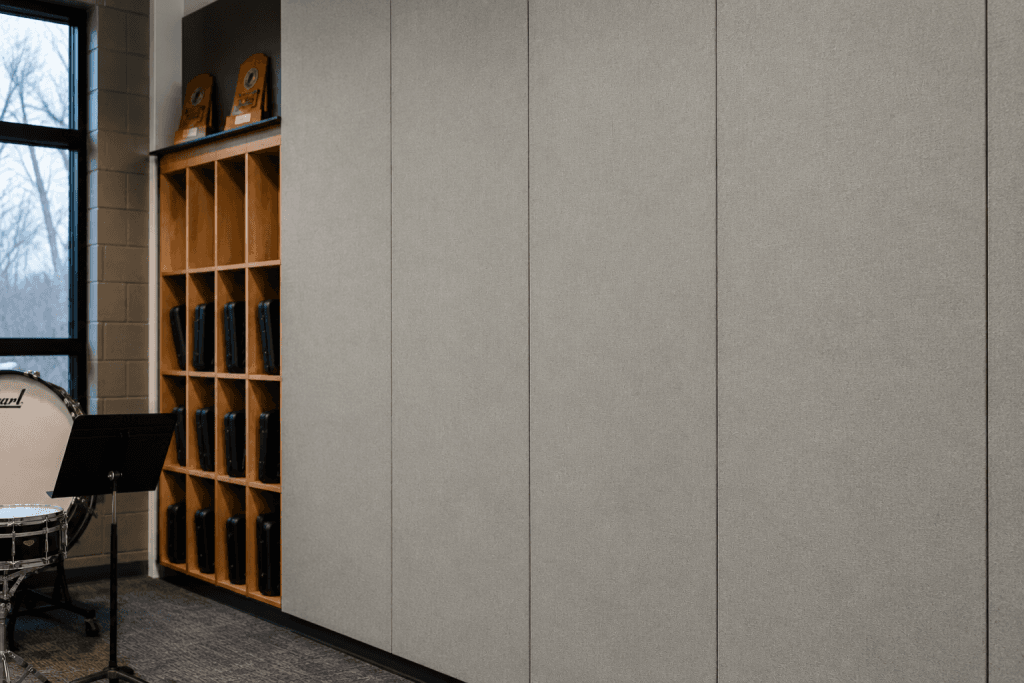
The evolution of facade fire regulations has fundamentally changed how the construction industry approaches material safety. Rather than viewing fire compliance as a separate discipline, architects and consultants increasingly integrate fire engineering into every layer of building specification, including interior acoustic systems. Fabric acoustic walls demonstrate how performance categories such as sound absorption, aesthetics, sustainability, and occupant safety must coexist within a unified design framework.
Lessons from facade failures have reinforced several critical principles. First, complete assemblies matter more than isolated products because hidden components can significantly alter fire behaviour. Second, cavity management and smoke control remain essential in both external and internal applications. Third, transparent testing and certification processes are increasingly necessary to support regulatory confidence and reduce specification ambiguity.
For acoustic designers, these developments do not diminish the value of fabric wall systems. Instead, they encourage more rigorous material selection, better installation practices, and greater coordination between acoustic consultants, fire engineers, and architects. As regulations continue evolving worldwide, fabric acoustic systems that combine verified fire performance, sustainable material strategies, and effective sound absorption will likely become increasingly important within contemporary architectural environments.
References
Babrauskas, V. (2016). Cladding Materials Library. Fire Safety Engineering Group.
European Commission. (2019). Fire Safety in Buildings. Publications Office of the European Union.
Drysdale, D. (2011). An Introduction to Fire Dynamics (3rd ed.). Wiley.
International Organization for Standardization. (1993). ISO 5660-1 Reaction-to-Fire Tests — Heat Release, Smoke Production and Mass Loss Rate. ISO.
European Committee for Standardization. (2018). EN 13501-1 Fire Classification of Construction Products and Building Elements. CEN.
Buchanan, A. H., & Abu, A. K. (2017). Structural Design for Fire Safety (2nd ed.). Wiley.
United Nations Environment Programme. (2023). Building Materials and the Climate: Constructing a New Future. UNEP.
Published
Tags
Share