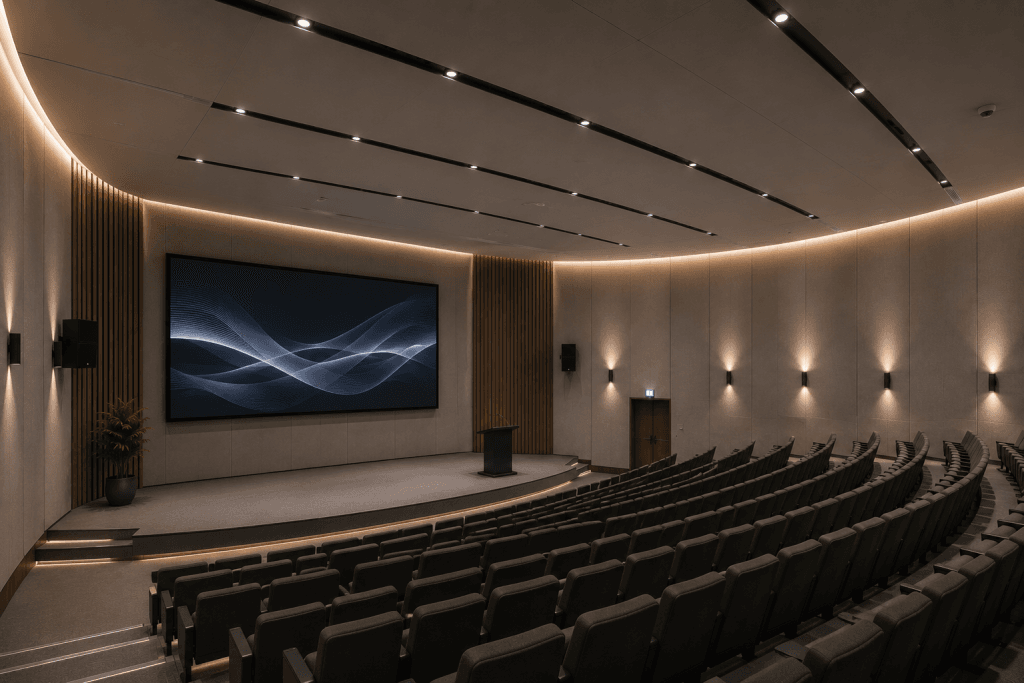
Fabric acoustic panels are widely used to improve speech intelligibility, reduce reverberation, and enhance occupant comfort in interior spaces. However, in tropical and humid regions, conventional acoustic materials can face challenges such as moisture absorption, mould growth, fabric degradation, and dimensional instability. As urban development expands across Southeast Asia, the Middle East, South America, and other humid regions, demand has increased for moisture-resistant fabric acoustic panels that maintain both acoustic performance and long-term durability.
The development of advanced fabric systems, synthetic fibres, and moisture-resistant acoustic cores has enabled architects and designers to specify fabric acoustic solutions in environments that were previously considered unsuitable for textile-based acoustic treatments. These innovations support healthy indoor environments while preserving acoustic quality and visual appeal.
Humidity presents unique challenges for acoustic materials. Moisture can alter the physical properties of acoustic absorbers, affect sound absorption efficiency, and accelerate material deterioration. Selecting suitable materials therefore requires consideration of both environmental exposure and acoustic requirements.
Many traditional acoustic materials absorb moisture from the surrounding air. Increased moisture content can change density, airflow resistivity, and internal structure, affecting acoustic absorption performance. In severe cases, repeated wetting and drying cycles may lead to dimensional instability or deformation. Studies on porous absorbers demonstrate that moisture conditions can influence the acoustic behaviour of fibrous materials, particularly at mid and high frequencies.²
Moisture-resistant acoustic systems are designed to minimise water absorption through hydrophobic fibres, protective facings, or closed-cell components while maintaining effective sound absorption characteristics.
Warm temperatures combined with high relative humidity create favourable conditions for mold growth. Fabrics and acoustic cores that retain moisture can become breeding grounds for fungi and bacteria, potentially affecting indoor air quality and occupant health.³
Modern acoustic fabric systems often incorporate synthetic fibres, antimicrobial treatments, and moisture-resistant core materials to reduce the risk of microbial colonisation. Proper ventilation and building envelope design remain equally important in maintaining healthy acoustic environments.
Humidity accelerates the ageing of many construction materials. Natural fibres may deteriorate more rapidly when exposed to prolonged moisture, while adhesives and coatings can weaken over time. Acoustic panel systems intended for tropical climates must therefore be evaluated for dimensional stability, corrosion resistance, and long-term performance.
Architectural specifications increasingly require materials that demonstrate resistance to humidity-related degradation while maintaining consistent appearance and acoustic effectiveness throughout their service life.
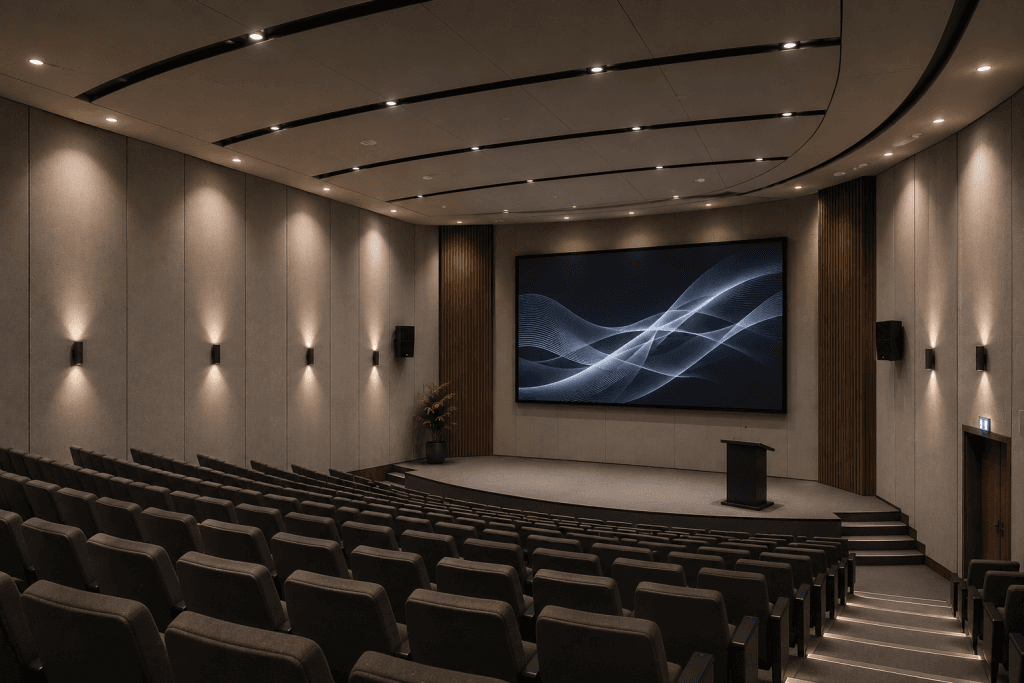
The performance of moisture-resistant fabric acoustic panels depends largely on the selection of suitable fabrics, acoustic cores, and supporting components. Modern systems combine engineered materials that balance acoustic absorption, durability, and environmental resistance.
Polyester fabrics are commonly used because they absorb significantly less moisture than many natural fibres. Their dimensional stability helps maintain panel appearance and tension over extended periods. PET acoustic cores manufactured from recycled polyester fibres also offer excellent resistance to moisture while delivering effective sound absorption performance.⁴
Mineral wool remains another widely specified acoustic core due to its non-organic composition and resistance to mould growth. When combined with moisture-resistant fabric facings, mineral wool systems can perform reliably in challenging indoor environments.⁵
Aluminium framing systems are frequently selected for stretched fabric acoustic installations because of their corrosion resistance and dimensional stability. Unlike timber-based framing, aluminium profiles are less susceptible to expansion, contraction, or degradation caused by humidity fluctuations.
Advances in textile technology have also introduced performance fabrics specifically engineered for humid climates. These fabrics combine acoustic transparency with stain resistance, moisture management, and enhanced durability, making them suitable for commercial, educational, hospitality, and transportation environments.
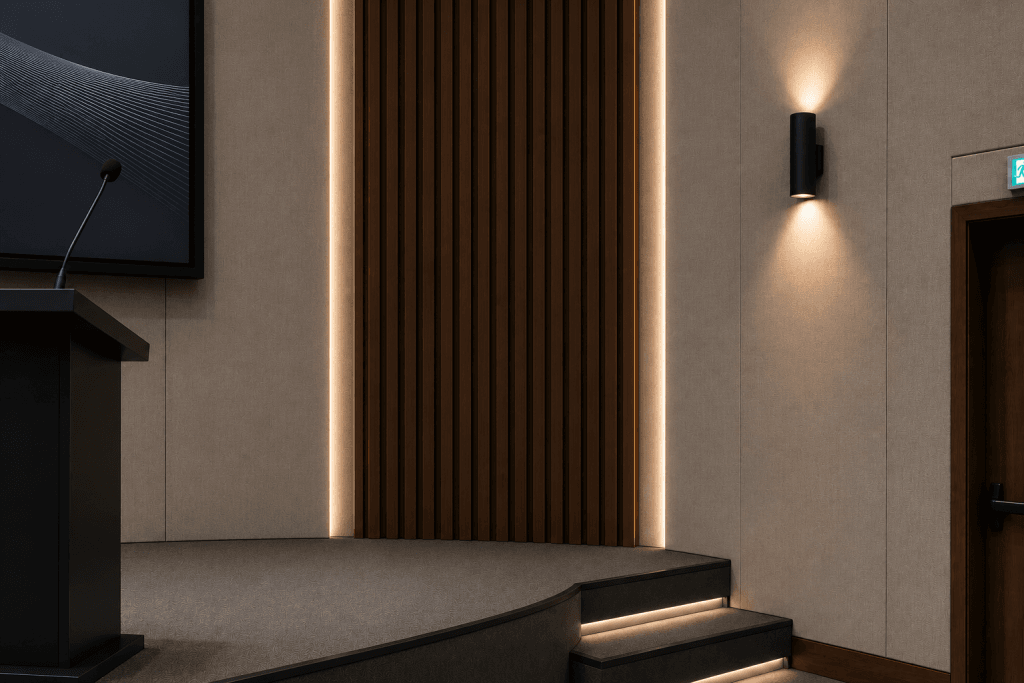
Moisture-resistant fabric acoustic panels are increasingly specified in projects where environmental conditions demand greater durability without compromising aesthetics or acoustic performance.
Schools and universities in tropical regions require acoustic treatments that withstand daily occupancy and seasonal humidity variations. Moisture-resistant fabric systems help maintain speech clarity while supporting healthy learning environments.
Hotels, resorts, and conference centres often experience elevated humidity levels due to occupancy patterns and climatic conditions. Durable fabric acoustic panels improve guest comfort while preserving visual quality over time.
Airports, rail stations, and transit terminals benefit from acoustic treatments that can tolerate varying environmental conditions. Moisture-resistant panels help control noise while meeting long-term maintenance requirements.
Hospitals and healthcare facilities require materials that support both acoustic comfort and indoor hygiene. Moisture-resistant acoustic systems reduce reverberation while helping minimise risks associated with microbial growth.
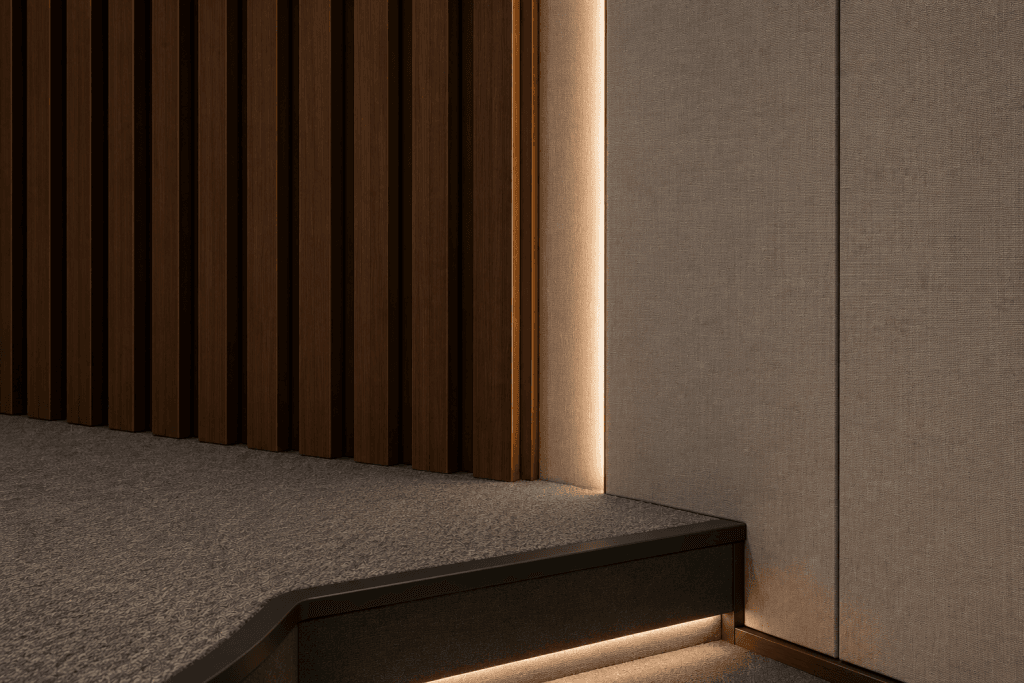
Moisture-resistant fabric acoustic panels have become an essential component of modern architecture in tropical and humid climates. Through advances in synthetic textiles, PET acoustic cores, mineral wool technologies, and corrosion-resistant support systems, these panels provide reliable acoustic performance while addressing environmental challenges associated with high humidity. As sustainable construction and occupant wellness continue to influence building design, moisture-resistant acoustic solutions offer a practical pathway toward improved indoor comfort, healthier environments, and long-term building durability. By carefully selecting materials suited to local climate conditions, designers can achieve spaces that remain acoustically effective, visually appealing, and resilient throughout their lifecycle.
References
Cox, T. J., & D’Antonio, P. (2016). Acoustic Absorbers and Diffusers: Theory, Design and Application. CRC Press.
Everest, F. A., & Pohlmann, K. C. (2015). The Master Handbook of Acoustics. McGraw-Hill Education.
Loos, A. (2017). Room Acoustics and Sound Absorption. Springer.
Ballou, G. (2013). Handbook for Sound Engineers. Focal Press.
Harriman, L., Brundrett, G., & Kittler, R. (2001). Humidity Control Design Guide for Commercial and Institutional Buildings. ASHRAE.
Pacheco-Torgal, F., Labrincha, J. A., Diamanti, M. V., Yu, C. P., & Lee, H. K. (2021). Biodegradation and Biodeterioration in Materials and Structures. Springer.
Published
Tags
Share