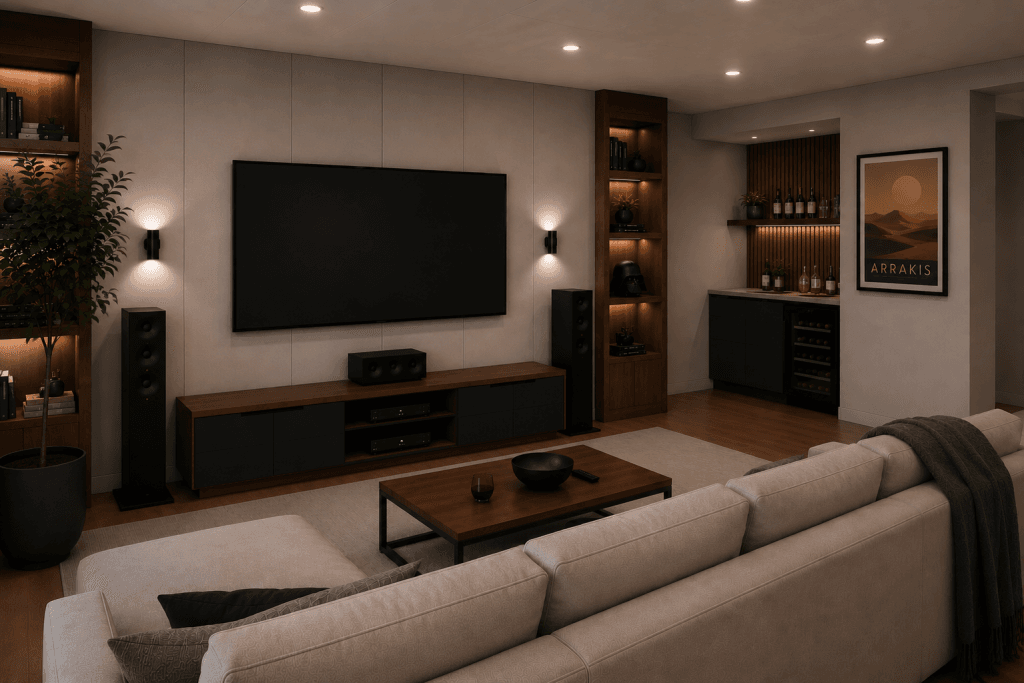
Artificial intelligence is increasingly shaping how acoustic materials are developed, tested, and refined before physical prototypes are manufactured. In fabric acoustic systems, predictive modelling tools can now estimate sound absorption behaviour, airflow resistance, resonance response, and reverberation control using computational datasets and machine learning frameworks. These technologies reduce material waste, shorten product development cycles, and support more accurate acoustic engineering during the earliest design stages.¹
As architectural acoustics becomes more performance-driven, manufacturers are integrating AI-assisted modelling into fabric wall systems, ceiling treatments, PET absorbers, and hybrid acoustic assemblies. Predictive systems allow designers to compare variables such as fabric density, backing composition, cavity depth, and mounting methods without relying exclusively on iterative laboratory testing.²
Artificial intelligence models rely on large datasets derived from laboratory measurements, impedance tube studies, simulation software, and reverberation chamber testing. These datasets allow algorithms to identify relationships between physical material properties and acoustic outcomes.
Machine learning systems require extensive acoustic datasets before accurate predictions become possible. Historical measurements from ISO 354 reverberation room testing, ASTM C423 absorption testing, and airflow resistance studies are commonly used as training inputs.³ By analysing repeated material behaviours, AI systems can identify how specific acoustic fabrics react at different frequencies.
For fabric acoustic panels, variables such as fibre structure, weave density, porosity, backing thickness, and installation spacing become measurable data points. Once integrated into predictive models, these variables allow engineers to estimate likely absorption coefficients before manufacturing a prototype.
AI systems are particularly effective when combined with parametric modelling environments. Designers can rapidly adjust dimensions, cavity depths, perforation patterns, or insulation densities while predictive software recalculates expected acoustic outcomes in real time.⁴ This creates a more responsive product development workflow.
In architectural projects, parametric acoustic simulations help reduce uncertainty during specification stages. Rather than testing multiple physical mock-ups, designers can compare digital alternatives before selecting the most suitable fabric acoustic configuration.
One of the most significant advantages of AI-driven acoustic analysis is frequency-specific prediction. Traditional assumptions about absorption often oversimplify material behaviour across octave bands. Machine learning tools instead evaluate how a fabric system performs at low, mid, and high frequencies individually.
This is especially useful for hybrid fabric assemblies incorporating PET, mineral wool, perforated timber, or membrane layers. Predictive modelling can estimate whether a system is likely to improve speech clarity, reverberation control, or low-frequency damping before fabrication begins.⁵
AI-assisted prediction changes how manufacturers approach acoustic product development. Instead of building repeated prototypes for every design variation, digital simulations can narrow viable options before physical validation begins.
Material optimisation also becomes more efficient. Acoustic engineers can test combinations of fabrics, absorbers, cavity depths, and framing systems digitally while monitoring projected reverberation behaviour. This reduces unnecessary sampling, lowers material consumption, and shortens research timelines.
In large architectural projects, predictive acoustic modelling supports earlier coordination between architects, acoustic consultants, and interior designers. AI systems can identify potential reverberation issues before installation details are finalised, reducing redesign risks during construction stages.
Digital acoustic prediction also contributes to sustainability objectives. Fabric acoustic manufacturers increasingly seek to minimise production waste associated with trial-and-error prototyping. By using predictive algorithms to eliminate weaker material combinations earlier in development, companies reduce unnecessary manufacturing cycles and laboratory resource consumption.⁶
Another important advantage involves scalability. Once a predictive model has been trained using validated laboratory data, manufacturers can rapidly test multiple fabric variations without restarting the entire measurement process. This supports faster innovation across acoustic wall systems, ceiling baffles, stretched fabric assemblies, and hybrid absorber products.
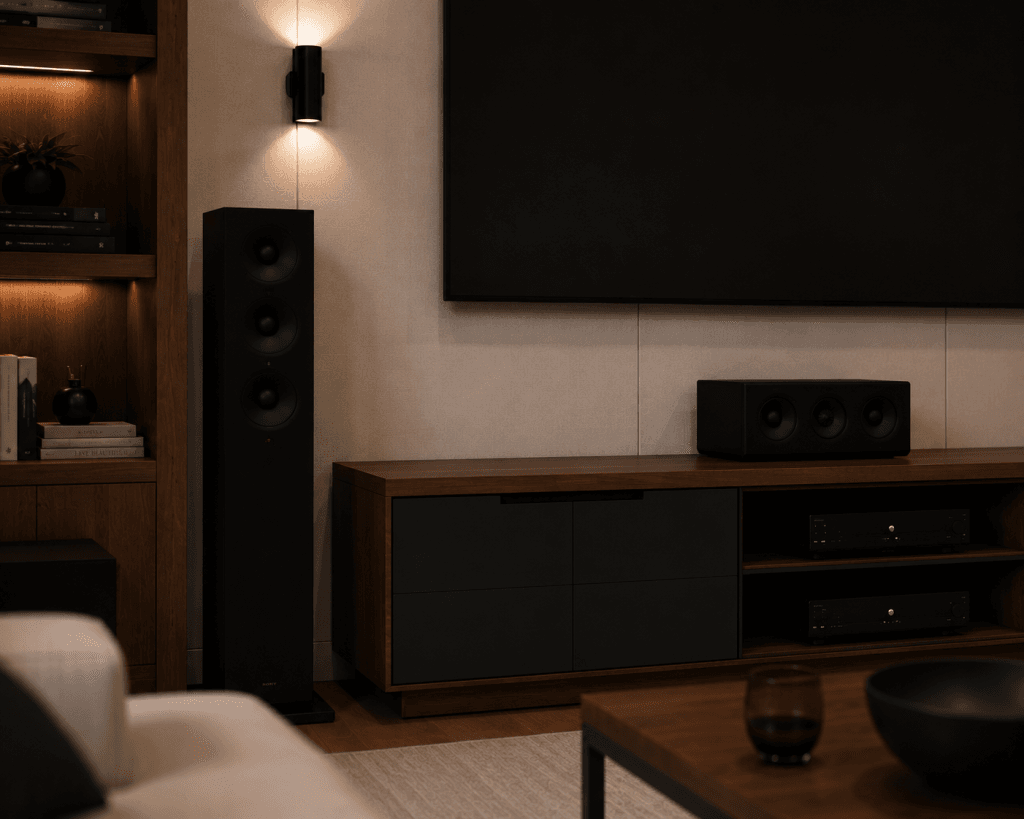
Artificial intelligence evaluates numerous material characteristics simultaneously when predicting acoustic performance. These variables influence how sound energy interacts with porous fabric surfaces and backing materials.
Fabric density significantly affects airflow resistance and sound absorption behaviour. AI systems can estimate how tightly woven materials influence mid- and high-frequency attenuation while balancing breathability and acoustic transparency.
Fabric tension alters surface resonance and vibration behaviour. Predictive tools analyse how stretched or relaxed installations modify acoustic response, particularly in stretched fabric track systems and membrane assemblies.
Hybrid acoustic systems often combine fabric facings with PET fibre, mineral wool, perforated timber, or foam cores. Machine learning models evaluate how these layered assemblies influence broadband absorption performance.
Surface geometry also affects acoustic diffusion and reflection. AI-assisted parametric tools can predict how folds, curves, spacing intervals, or segmented panel layouts alter room acoustics before installation drawings are finalised.⁷
Artificial intelligence is reshaping acoustic engineering by allowing designers to evaluate fabric acoustic performance before physical prototyping occurs. Predictive modelling reduces development timelines, improves material efficiency, and supports more informed design decisions during early project stages. As machine learning datasets continue expanding through laboratory validation and computational simulation, AI-driven acoustics will likely become a standard component of architectural material development.
For fabric acoustic manufacturers, this shift represents more than a technological convenience. Predictive acoustic analysis enables faster innovation, more sustainable prototyping practices, and closer integration between digital modelling and real-world performance testing. Although physical validation remains essential for certification standards such as ISO 354 and ASTM C423, artificial intelligence increasingly acts as an advanced pre-engineering tool capable of narrowing design variables long before fabrication begins. The combination of AI, parametric simulation, and validated acoustic datasets is therefore expected to play a major role in the future development of fabric acoustic systems across commercial, educational, hospitality, and performance environments.
References
Cox, T. J., & D’Antonio, P. (2016). Acoustic Absorbers and Diffusers: Theory, Design and Application. CRC Press.
Kuttruff, H. (2016). Room Acoustics. CRC Press, 6th Edition.
Long, M. (2014). Architectural Acoustics. Academic Press, 2nd Edition.
Morse, P. M., & Ingard, K. U. (1987). Theoretical Acoustics. Princeton University Press.
Savioja, L., & Svensson, U. P. (2015). Overview of Geometrical Room Acoustic Modeling Techniques. Journal of the Acoustical Society of America, 138(2).
Vorländer, M. (2020). Auralization: Fundamentals of Acoustics, Modelling, Simulation, Algorithms and Acoustic Virtual Reality. Springer, 2nd Edition.
Published
Tags
Share